
Key points
- From December 6th, 2026, U.S. stocks are set to trade 23 hours a day, five days a week. Nasdaq's new Night Session runs from 9 p.m. to 4 a.m. Eastern, opening on Sunday nights, after the SEC granted the plan accelerated approval on April 10th, 2026.
- The only closed hour is 8 p.m. to 9 p.m. Eastern, a daily maintenance window the industry set aside for clearing and reconciliation.
- The SEC is already asking what comes after that. At a September 17th roundtable, Chairman Paul Atkins said, "We are moving towards a new day, and night, for our capital markets."
The date is not Nasdaq's alone. Jamie Selway, director of the SEC's Division of Trading and Markets, told the roundtable: "On December 6, our market data infrastructure is set to expand to 23-by-5, which will allow a number of approved exchanges to offer trading during these hours." The consolidated tape, the feed that publishes every quote and trade, has been the bottleneck. Nasdaq's approval order says it will launch "upon the availability of the Securities Information Processor to operate during the Night Session."
Who is ready
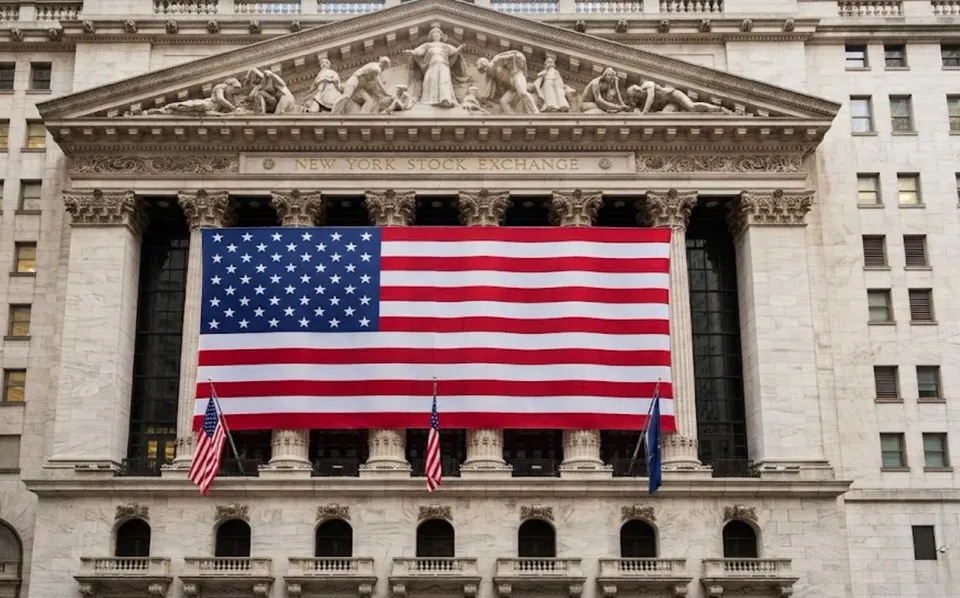
Nasdaq (NDAQ) filed its 23-hour proposal on December 29th, 2025 and won approval about three and a half months later. The New York Stock Exchange, owned by Intercontinental Exchange (ICE), already holds SEC approval for a 22-hour day from 1:30 a.m. to 11:30 p.m. Eastern, Euronews reported, and Cboe has outlined similar ambitions. Behind the exchanges, DTCC's clearinghouse began clearing equities on a 23-by-5 basis in June 2026.
Overnight trading is not new, only exchange-grade overnight trading is. Four alternative trading systems already run night sessions, and Nasdaq says roughly 2% of volume happens outside the current 4 a.m. to 8 p.m. window. In the Night Session every NMS stock may trade, pegged and other unpriced orders are barred, and a dedicated surveillance team can halt trading in real time.
Why regulators want it
Atkins made the case in demand terms. "Many investors are seeking the ability to respond and adjust their positions on an ever-more-frequent basis," he said, adding that expanded overnight hours "would align U.S. exchange hours with those of trading venues overseas." Foreign holdings of U.S. equities reached about $17 trillion by mid-2024, up 97% since 2019.
The roundtable ran three panels: preparedness, resiliency and next steps, with speakers from Robinhood, Schwab, Interactive Brokers, Citadel Securities, BlackRock, DTCC, NYSE, Nasdaq and Cboe. Selway's line was the one the room was waiting for: "Future expansion to 24-by-7 is a possibility." SIFMA, the brokers' trade group, wants participation in the overnight window to stay optional.
What the exchanges' own insiders are doing
The companies that will run the longer day have not been buying their own shares ahead of it. Form 4 filings reviewed by InsiderBuying.com show the latest insider transactions at Nasdaq, ICE and Robinhood (HOOD) are all sales or option exercises, with no open-market purchase among them. Four Nasdaq executives sold a combined $1.24 million of stock between August 3rd and August 10th, 2026, led by chief information officer Bradley Peterson's 6,000 shares at $95.55, or $573,300. ICE finance chief Warren Gardiner sold 2,491 shares at $156.30 on August 19th, and Robinhood co-founder Baiju Bhatt sold 27,389 shares for about $3.14 million on September 10th.
Company data and the full transaction records are on the Nasdaq, ICE and Robinhood pages. Insider Access members track real-time insider activity across the exchange and brokerage stocks that will carry the new hours.
Informational only, not investment advice.