
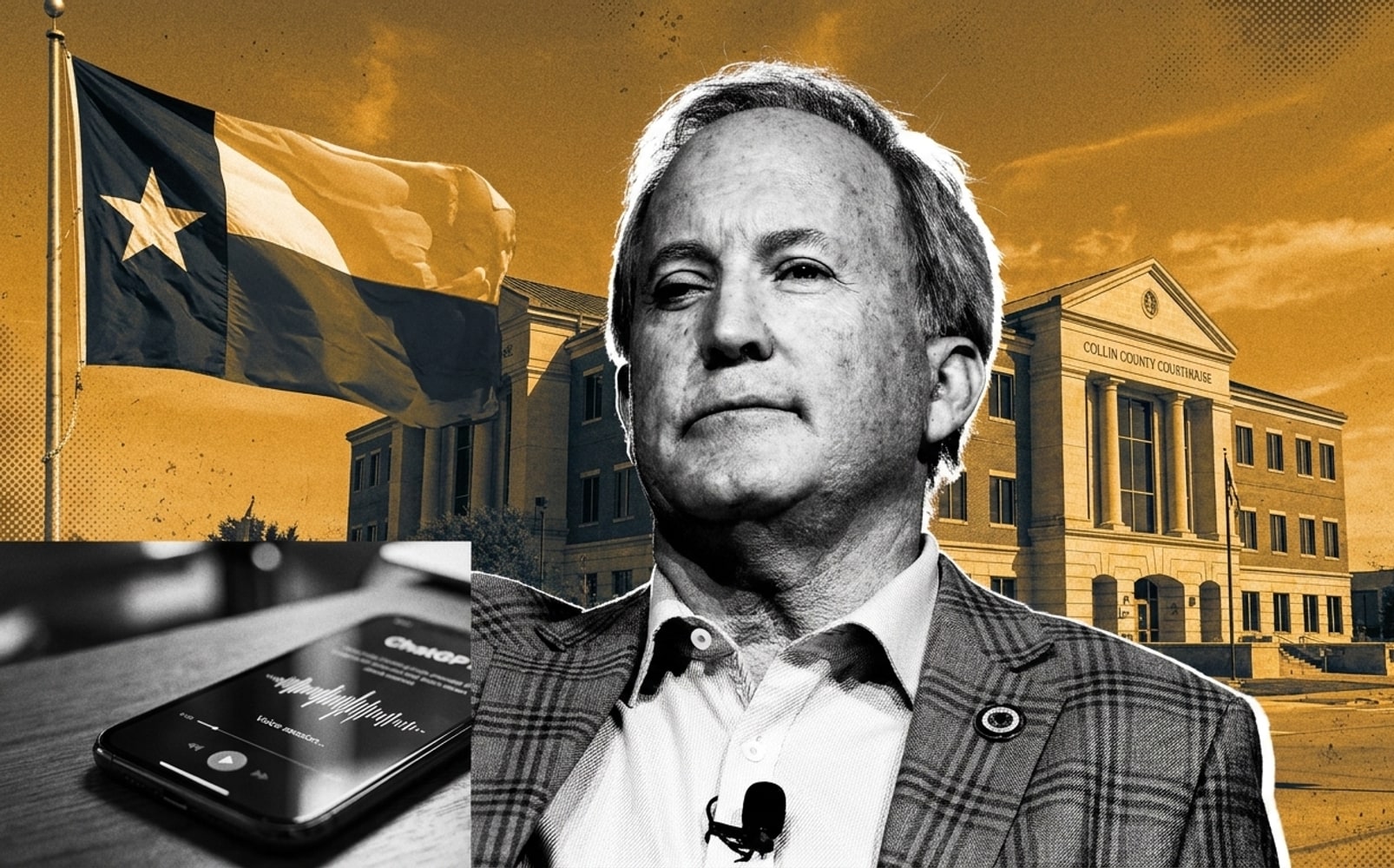
Texas Attorney General Ken Paxton sued OpenAI and its chief executive, Sam Altman, on October 23rd, 2026, over the safety of ChatGPT. The state is seeking civil penalties of $10,000 per violation of its consumer protection law, according to Reuters, carried by Yahoo News.
The Houston Chronicle reported that the suit asks a judge to order OpenAI to pay Texas $10,000 for each violation found and to surrender profits obtained unlawfully. No outlet reviewed has reported a total damages figure, and the number of alleged violations has not been made public.
What happened
Courthouse News Service reported that Paxton filed in Collin County District Court on Friday, October 23rd, 2026, naming both OpenAI and its founder. The claim is that the company misled Texas consumers about ChatGPT's safety and failed to put sufficient safeguards in place.
The Texas Attorney General's office said in its press release the same day that it sued "Open AI Global, LLC" and affiliated entities, including Altman, for imposing negative side effects on consumers and failing to protect Texans, including children, from the harms of relying on ChatGPT. The Hill reported that the complaint brings claims under the Texas Deceptive Trade Practices-Consumer Protection Act and the Securing Children Online through Parental Empowerment Act, known as the SCOPE Act. Bloomberg Law's account of the attorney general's statement also cites the DTPA claims.
What the state is asking for
Beyond the per-violation penalties, Reuters via Yahoo News reported that the complaint asks the court to prohibit OpenAI from offering ChatGPT to minors in Texas and to block the company from releasing new AI models to Texas users without sign-off from an independent third-party evaluator. Courthouse News described the requested injunction as barring new ChatGPT models in the state without approval from a court-appointed independent evaluator.
The complaint, as quoted by The Hill, says that despite the dangers it describes, Altman and OpenAI barreled ahead in creating those risks and did so by unlawfully deceiving Texans about the safety, accuracy and reliability of their products. Paxton said in a statement carried by Reuters and Texas Scorecard that OpenAI has a responsibility to protect users and warn them about the dangers of its platform, and that he would fight to protect Texans from the harms of AI.
An OpenAI spokesperson told the Texas Tribune that the company has worked with experts to mitigate risks and build additional safeguards, and said OpenAI is committed to working with Texas and other states on pragmatic AI policies that apply to the entire industry rather than one company.
What the record shows
Our own record has nothing to add on the trading side, and that is the point worth stating plainly: OpenAI shares are not publicly traded. CNBC, TechCrunch, Fortune and Reuters reported on June 8th and June 9th, 2026 that OpenAI confidentially filed a draft S-1 registration statement with the SEC, about a week after Anthropic did the same. Investing.com noted that as of its writing there was still no public S-1, no exchange, no ticker and no official price range. There is no listed-company ticker attached to this lawsuit and no insider filing record to read against it.
The Texas Tribune reported that the lawsuit opens with a 2015 quote attributed to Altman saying AI will probably most likely lead to the end of the world, but that in the meantime there will be great companies. The Tribune also reported that Paxton has in the past year sued or settled with Meta, TikTok, Snapchat and Roblox under the state's consumer protection laws. The Houston Chronicle listed Meta, TikTok and Roblox.
What to watch
The politics sit close to the filing. The Texas Tribune reported that Paxton is running for U.S. Senate and that Elon Musk, who co-founded OpenAI and left in 2018 after a conflict with Altman, is the largest single donor behind that campaign, having spent nearly $200 million to support him. The Tribune also reported that Musk's own 2024 suit against OpenAI and Altman sought $1.5 billion and was thrown out by a federal judge.
Texas Scorecard described the filing as a 67-page lawsuit. No other outlet reviewed confirmed that page count, and the complaint itself was not obtained for this check.
Reporting from the Office of the Texas Attorney General, Courthouse News Service, The Texas Tribune, The Hill, Reuters via Yahoo News, the Houston Chronicle, Bloomberg Law, Texas Scorecard, The Texan, CNBC and TechCrunch, dated October 23rd, 2026.
Informational only, not investment advice.